

What is Mohair?
Mohair is one of nature’s softest gifts. Grown from Angora goats and known as the Diamond Fiber for its strength and luminous beauty.
Its unique qualities make it extraordinary: lightweight yet warm, silky yet strong, with a smooth, fluid drape and a gentle sheen that catches the light. Because each strand of mohair is smooth and lacks crimp, it doesn’t naturally spring back into shape on its own. That is why we pair our mohair with fine merino wool from the Mountain West.
Together, the two fibers create something truly special. Mohair brings elegance and softness while merino provides structure and memory. Blended, they become the foundation of our exclusive socks and throws. Pieces that offer cozy comfort and lasting quality you can feel from the moment you touch them.
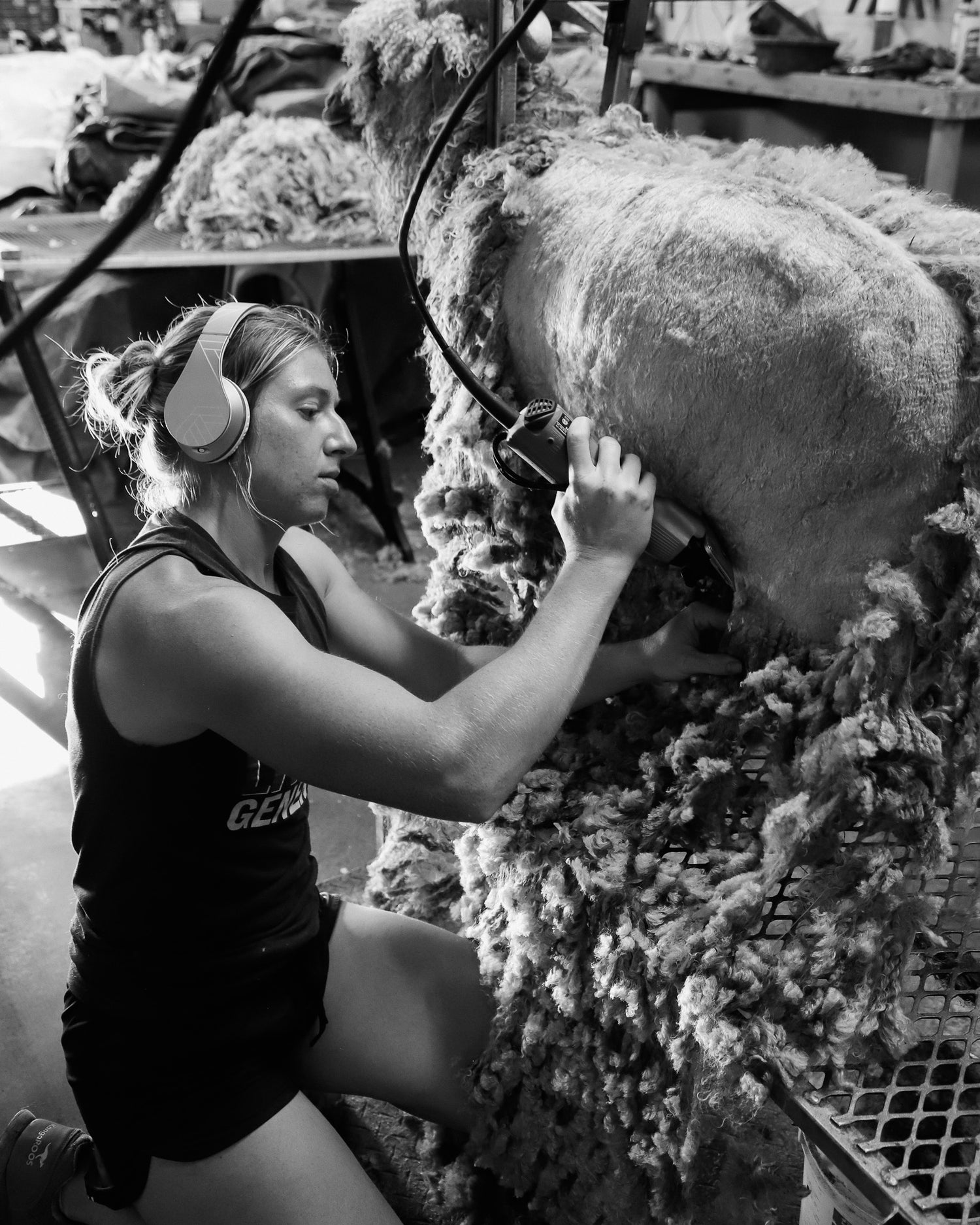
Shorn Twice a Year
Every spring and fall, we shear our Angora goats — a natural, essential part of their care and wellbeing. Shearing takes place on a stand, much like a dog at the groomer, and is done in a calm, low-stress environment.
Our goats know the rhythm of the seasons, and they usually behave far better than any pup on a grooming table.
As the clippers move gently along their bodies, the silky mohair curls are gathered by hand and carefully skirted and sorted.
Hooves are trimmed and they happily rejoin the herd — ready to begin growing their next fleece.
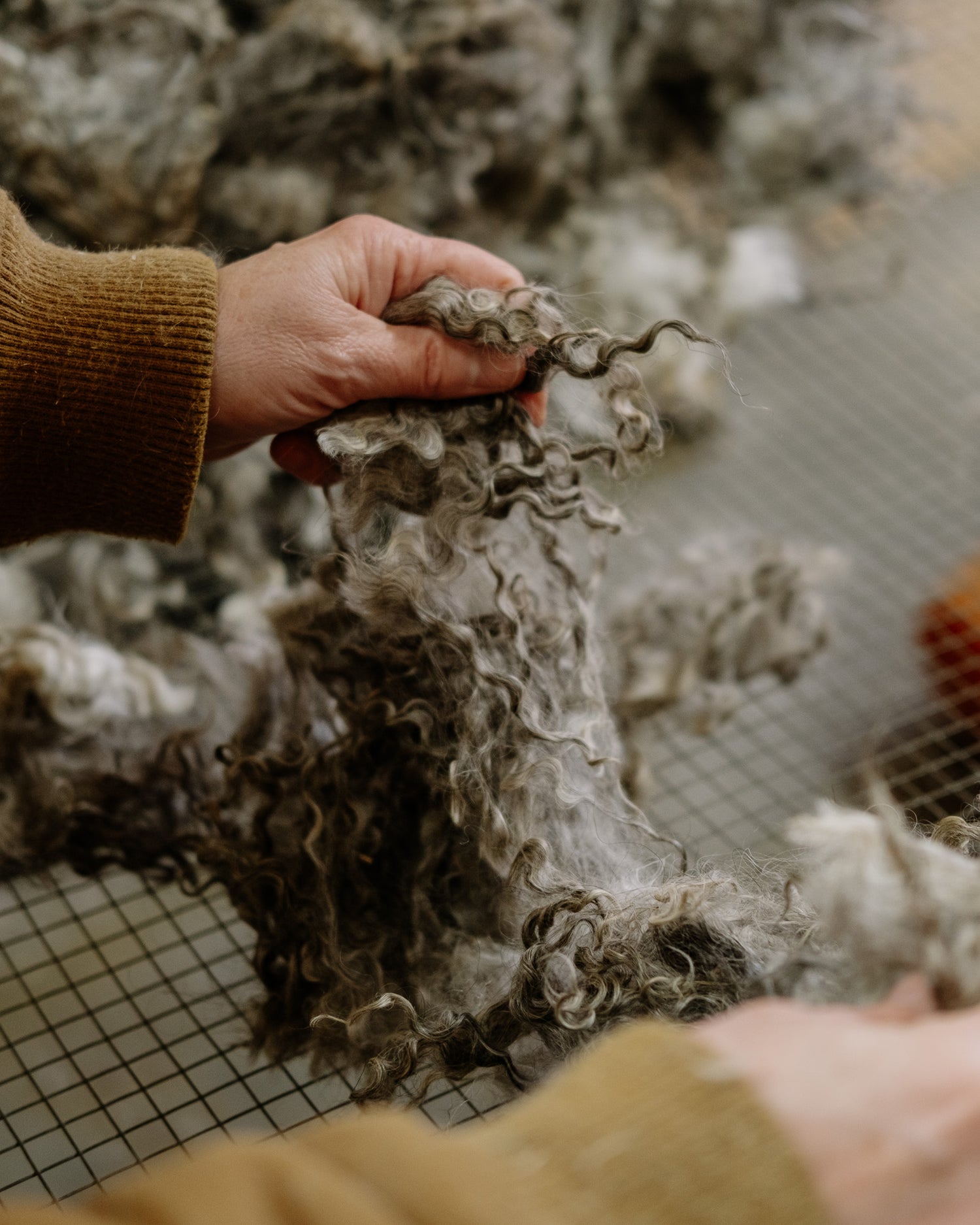
Skirting and Sorting
After shearing, each fleece is carefully skirted, sorted, and graded. Skirting is the process of removing seeds, straw, and anything that doesn’t belong.
We sort each fleece by its natural color and then grade it by micron — a measure of fineness. Our softest, lowest-micron mohair is reserved for our socks and throws, where comfort and next-to-skin softness matter most.
The stronger, higher-micron fibers find new purpose in rugs and other durable goods.
The Importance of Micron
At Red Falcon Ranch, we track the micron of every goat in our herd. Micron count measures the diameter of a single strand of mohair — a number that reveals so much about the feel and character of the fiber.
The lower the micron, the softer and finer the mohair; the higher the micron, the stronger and coarser it becomes.
If you think back to your grandmother’s wool blankets or sweaters — the ones that lasted forever but felt a bit scratchy — they were likely made from higher-micron fiber. That strength is what helped them endure for generations, and gave them that dreaded itch factor.
For our socks and throws, we choose only low-micron mohair and pair it with low-micron merino wool. The result is a blend that is soft, comfortable, and beautifully suited for next-to-skin wear — the kind of natural luxury you can feel instantly.

We specialize in natural colored mohair.
Most mohair around the world is white. White has been the desired color for millennia because it dyes easily and consistently. In America, the majority of white Angora goats are raised on the Texas range. At Red Falcon Ranch, we focus on natural-color mohair — a rare and highly prized segment of mohair production, cultivated on small ranches across the country.
Natural-color mohair allows us to bring the beauty of the fiber itself into clothing and home goods — no dyes required. Our Angora goats produce a full spectrum of reds, browns, and blacks, each fleece unique and full of character.
We blend these natural shades to create our melange socks, and we draw from the same palette to craft the undyed colorways in our throws. The result is mohair that celebrates nature’s own artistry, straight from our herd to your home.
Common questions about mohair
I am allergic to wool, can I wear mohair?
People who are allergic to wool are often reacting to the itch factor in coarser wools.
Low micron merino wool and mohair do not have the itch factor.
We often get feedback from people allergic to wool that are able to finally wear natural comfy socks!
Is mohair called angora?
Mohair is the silky fiber that grows on Angora goats. It is not the same as “Angora wool” from angora rabbits — they are different fibers.
Mohair is prized for its natural sheen, strength, and softness.
What is an Angora goat?
The Angora goat is a goat that grows a mohair fleece. It originated in the Ankara region of Turkey.
Do you use your angora goats for meat or milk?
No! They are a single purpose goat used for their mohair. We do not eat our goats nor do we send them to auction or slaughter.


Mohair history and fiber comparisons
Historical uses of mohair
Mohair has been used for millennia in clothing, home and utility goods. High end men’s suits and women’s scarves feature fine mohair for the drape and sheen of the fabric.
Coarser mohair was valued for strength and durability, particularly for upholstery. Prior to synthetic fibers, mohair upholstery was used for sofas, chairs, and automobile interiors. Mohair’s natural fire resistance, resilience, and ability to hold dye beautifully made it ideal for long-lasting, high-quality furnishings.
Mohair is the gold standard for horse tack such as cinches and saddle pads and has been the gold standard for cowboy gear for the past 150 years.
What is the difference between mohair and cashmere?
- Cashmere is extremely fine, usually 14–19 microns, making it incredibly soft but delicate. Mohair, even fine kid mohair, is slightly coarser (18–23 microns) but stronger.
- Mohair fibers are naturally resilient and long-lasting, making them ideal for products that undergo friction and wear. Cashmere is softer but more prone to pilling and stretching.
- Mohair is smooth and lacks significant crimp, giving a sleek, fluid drape. Cashmere has more natural crimp, which creates loft and warmth but less drape and shine.
- Mohair absorbs up to 30% of its weight in moisture without feeling wet, and is excellent at regulating temperature. Cashmere absorbs less moisture and provides high insulation but can lose loft if wet.
What is the difference between mohair and alpaca?
- Mohair is exceptionally strong — one of the strongest natural animal fibers — which allows it to hold shape and resist wear. Alpaca is soft but less resilient and durable.
- Mohair has a natural, silky sheen due to its smooth surface cuticle, giving it a reflective quality. Alpaca has a matte finish with shorter, fuzzier fibers.
- Mohair has a natural drape bringing luxury as a stand alone fiber. Alpaca lacks drape.
- Mohair can absorb up to 30% of its weight in water without feeling wet or heavy. Its smooth, non-crimped fibers allow moisture to move through quickly, so it dries faster than many other fibers. Even when damp, mohair retains its strength, drape, and softness, making it ideal for functional luxury items.
- Alpaca fibers absorb less moisture (around 20–25% of their weight) but hold it closer to the fiber, which can make garments feel damp or heavier when wet. Fine alpaca is soft but loses some resilience and loft when wet, and it takes longer to dry compared to mohair.
In practical terms, this means mohair is more versatile in varying climates and for items that touch the skin — it stays comfortable, breathable, and quick-drying, even in damp conditions.
Alpaca, while luxuriously soft, is better suited for dry-cold conditions or layered garments.
Shop Naturally Soft Mohair Socks
-
The Everyday Mid-Calf Sock
Regular price $34.00Regular priceUnit price per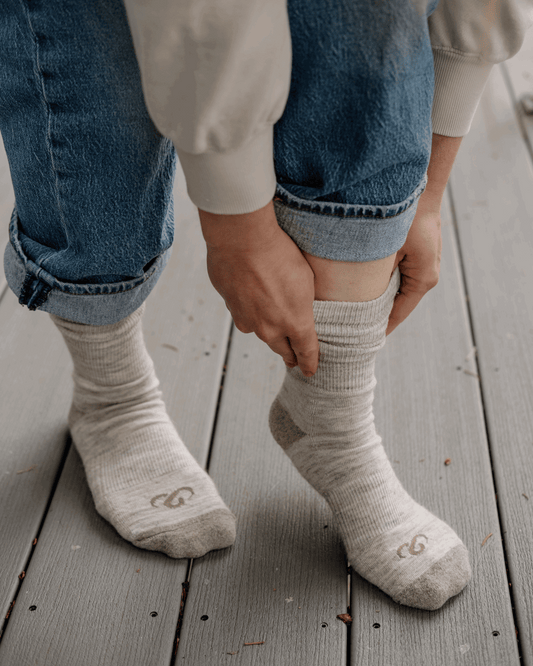
-
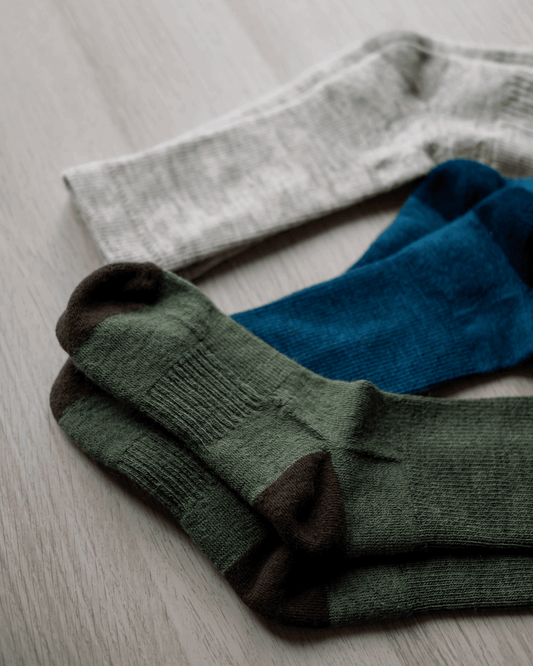
The Solid Casual Crew Sock
Regular price $34.00Regular priceUnit price per

-
The Cabin Sock
Regular price $48.00Regular priceUnit price per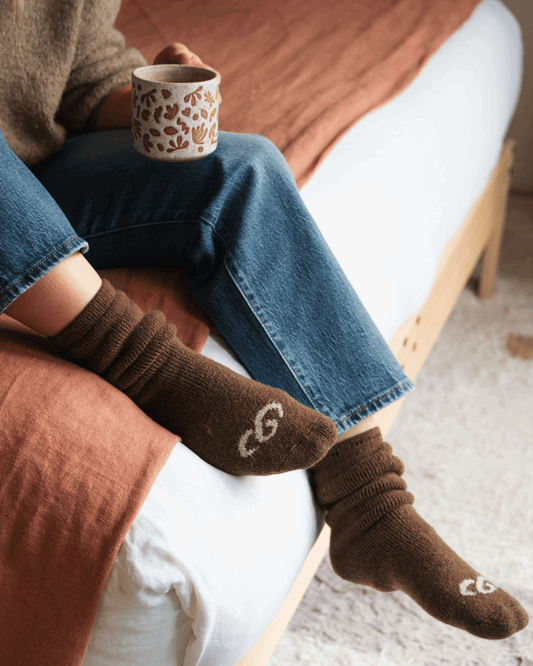
 Sold out
 -
The Patterned Casual Crew Sock
Regular price $34.00Regular priceUnit price per


